
Google Has Changed Search — What Does It Mean for Your Business?
Google is now using artificial intelligence to answer more questions directly in search results. What does this mean for your company's visibility, and what should you do to be found online?
Google Has Changed Search — What Does It Mean for Your Business?
In the past, the path from a Google search to a business was fairly straightforward: a customer searched, found a website and clicked through.
That does not always happen anymore.
Google now uses artificial intelligence to answer questions directly in search results. A customer may get the information they need without visiting a website. At the same time, Google may show links to websites that helped provide the answer.
For businesses, this means there is more to consider than one question: Are we ranking well on Google?
It is also important to understand how customers discover information, which businesses appear in search and whether that visibility leads to new customers.
Google now provides answers, not just links
Google has introduced several AI features into its search experience.
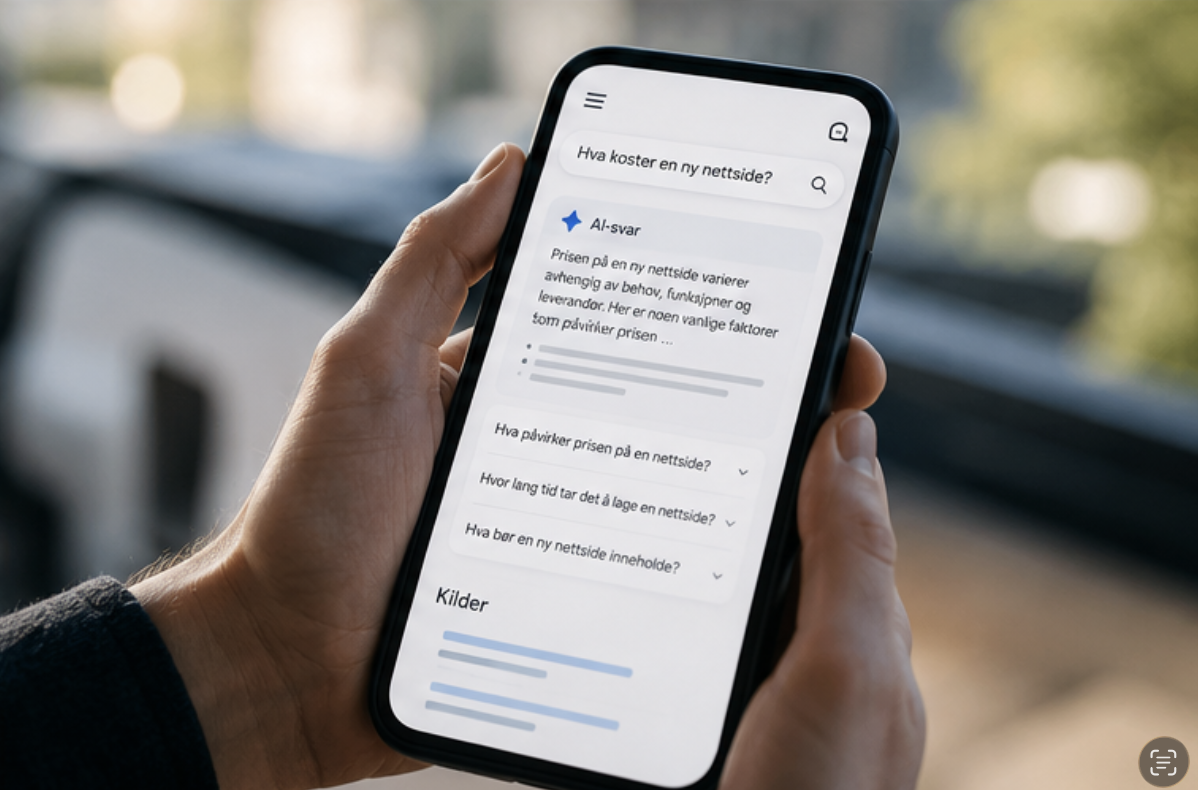
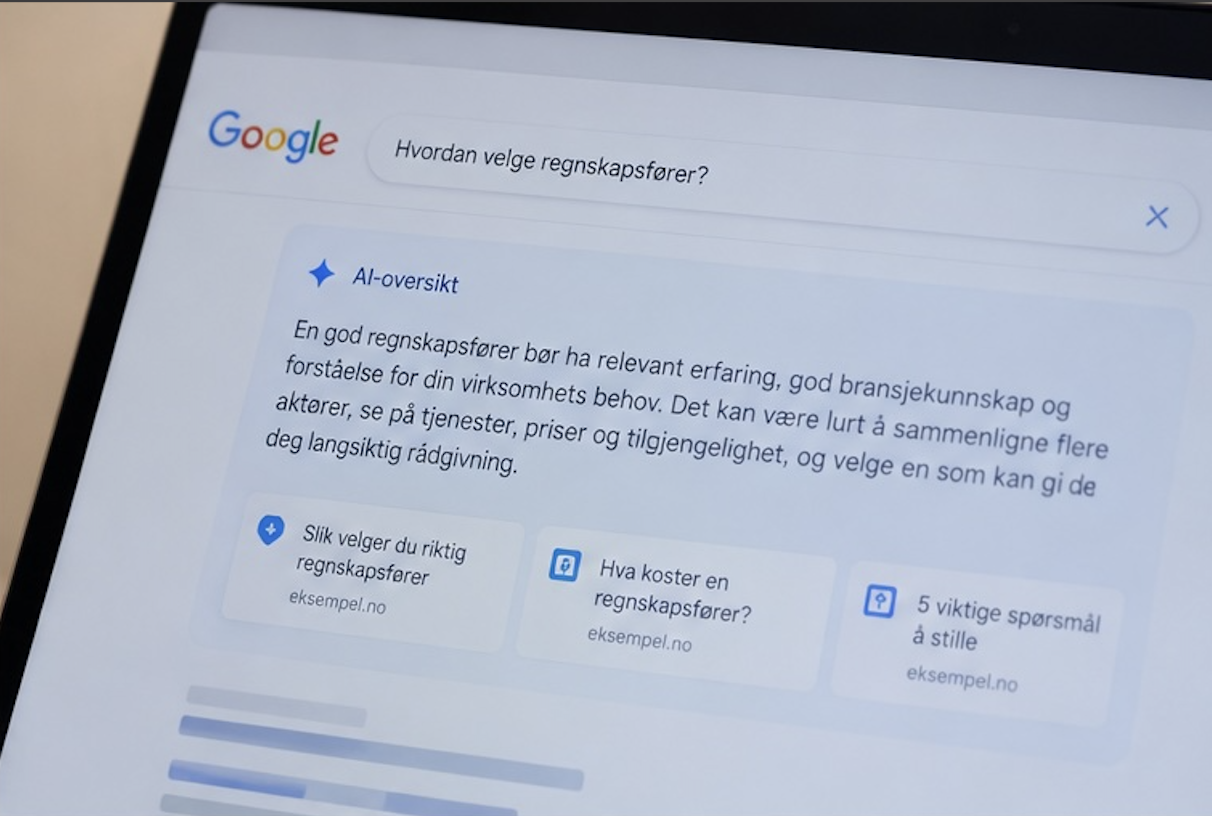
AI Overviews display AI-generated summaries for certain searches. Users can get a short answer directly on the results page, often with links to relevant sources.
AI Mode allows users to explore questions in greater depth through a more conversational search experience. They can ask follow-up questions and investigate a topic without starting a completely new search each time.
The features are different, but they point in the same direction: Google is becoming more of a place where people get answers, rather than simply a place where they find websites.
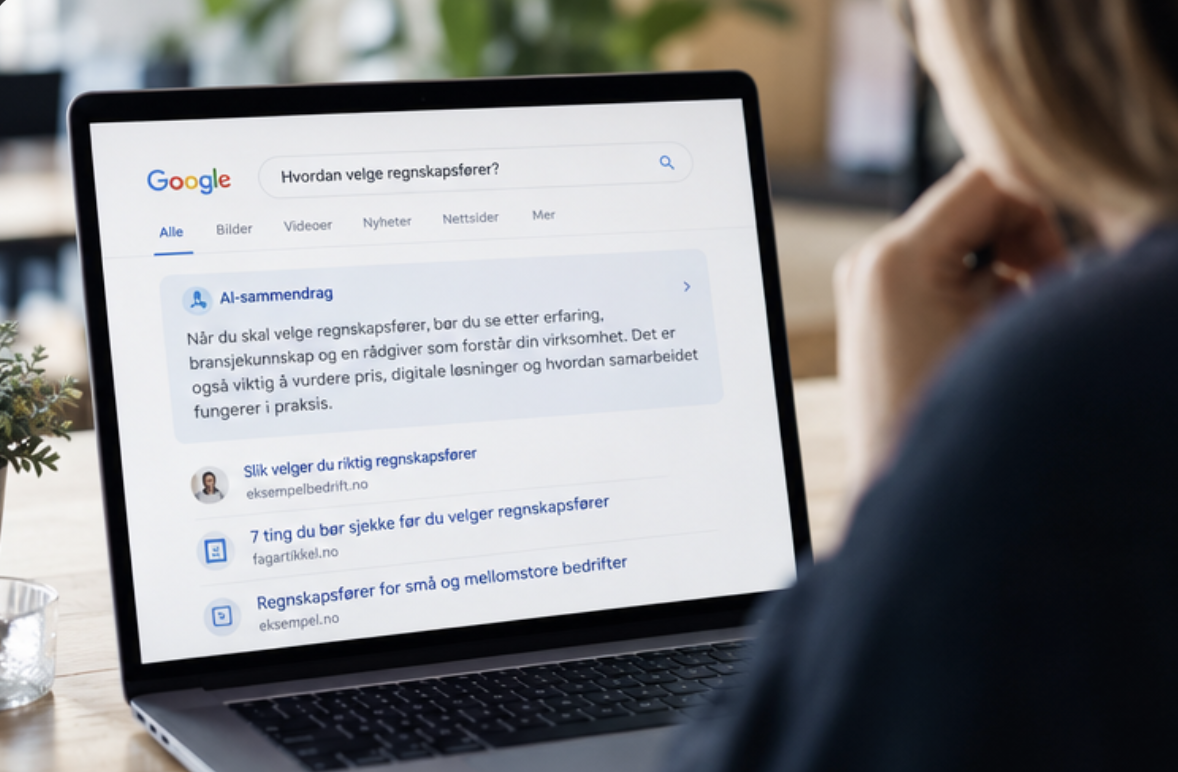
Imagine someone searching for “How do I choose an accountant?”
Previously, the user might have opened several articles to compare advice. Now, Google may provide a summary directly in the search results, with links to relevant sources.
Businesses that appear in this context may gain attention. Others may find that fewer people click through to their websites.
That is the change businesses need to understand.
Fewer clicks do not automatically mean fewer customers
When Google answers a question directly, users may not visit the website that contains the information. A website can therefore receive fewer visits even if it maintains a good position in traditional search results.
But visitor numbers do not tell the whole story.
Someone searching for general information may not be ready to buy anything. Another person may be looking for a specific service provider and visit the website to check prices, experience and services.
The important question is not just how many people visit your website, but whether the right people find you and get in touch.
For a consultancy, ten relevant enquiries may be more valuable than a hundred visits from people who are unlikely to buy a service.
That does not make traffic irrelevant. It means traffic should be evaluated alongside the results it generates.
Can your business appear in Google’s AI answers?
There is no guaranteed formula that ensures Google will select your website as a source for an AI-generated answer.
However, there are several sensible steps you can take.
Answer the questions your customers actually ask
Think about what potential customers want to know before they buy your services.
A plumber could explain what affects the cost of a job. An accountant could describe the differences between business structures. A consultant could explain common mistakes when choosing a service provider.
Articles like these help customers understand a problem and show how your business can help.
The key is to provide useful information. An article that simply repeats general advice found on many other websites gives readers little reason to choose your business.

Show what your business can actually do
Do not simply claim that your business has extensive experience and strong expertise. Explain what you do, which problems you solve and how you approach the work.
Use practical examples where possible. Explain complicated subjects in plain language. Be clear about what is known and what depends on the individual situation.
Useful, well-explained content helps potential customers assess your business. It also gives search engines clearer information about the subject of your website.
Make sure your website works properly
It is still important that Google can find and read your website.
Check that important pages are accessible, that navigation and links work, and that the website is easy to use on mobile devices. Keep your contact details and service descriptions up to date.
You do not need a special AI trick or a separate text file to appear in Google’s AI answers. The fundamentals of maintaining a good website still matter.
Make it easy for customers to contact you
Someone may discover your business through Google but still choose a competitor if it is difficult to understand what you offer.
Describe your services clearly. Explain who you help, and make it easy for people to send an enquiry or book a meeting.
Visibility has limited value if the website does not help visitors take the next step.
How can you tell whether AI search is affecting your business?
It is easy to get caught up in new features and technical terminology. But as a business owner, you mainly need to know whether your marketing is producing results.
Start by asking a few simple questions:
- Are more or fewer visitors coming from Google?
- Which pages are people finding?
- Which searches make your website appear?
- Is your business receiving relevant enquiries through the website?
- Do those enquiries turn into customers and revenue?
Google Search Console provides information about how your website appears in Google Search, including impressions and clicks. Google Analytics or another analytics tool can help you understand what visitors do on your website.
It is harder to get a complete picture of how often a business is mentioned or used as a source in AI-generated answers. Available measurement methods have limitations, and results can vary between searches.
Be cautious about making sweeping claims about your AI search visibility. Use the data available to you, monitor changes over time and look for connections between visibility, enquiries and sales.
Do you need to change your entire SEO strategy?
No.
You do not need to abandon your existing search engine optimisation work. A website with useful content, a clear structure and accurate information still has a solid foundation.
The change is that a good ranking does not always generate as many clicks as it once did. Google may answer certain questions directly, and customers may discover businesses in ways other than clicking the first traditional search result.
It therefore makes sense to focus on three things:
- Keep improving your website. Create content that helps customers, and make sure your business information is clear and up to date.
- Look beyond rankings. Track relevant visits, customer enquiries and sales as well.
- Be realistic about AI search. Nobody can guarantee that Google will select a particular article. Prioritise work that benefits customers rather than methods that promise guaranteed AI visibility.
Visibility is only the beginning
Google’s AI search is changing how people find and use information. For businesses, this may affect how many people click through to their websites and how potential customers discover their services.
But the goal is not to collect as many clicks as possible or to appear in the largest number of AI answers.
The goal is to be found by the right customers, provide useful information and make it easy for them to move from interest to contact.
Continue Reading
More practical thinking on trust, discovery, and building a digital presence that compounds over time.





See where your biggest opportunities are
Start with a complimentary SEO audit and discover where your greatest opportunities for sustainable growth are hiding