
Why Your Website Needs an XML Sitemap
An XML sitemap helps search engines discover important pages on your website. Learn how sitemaps work, which URLs to include, and how to use them as part of a practical technical SEO strategy.
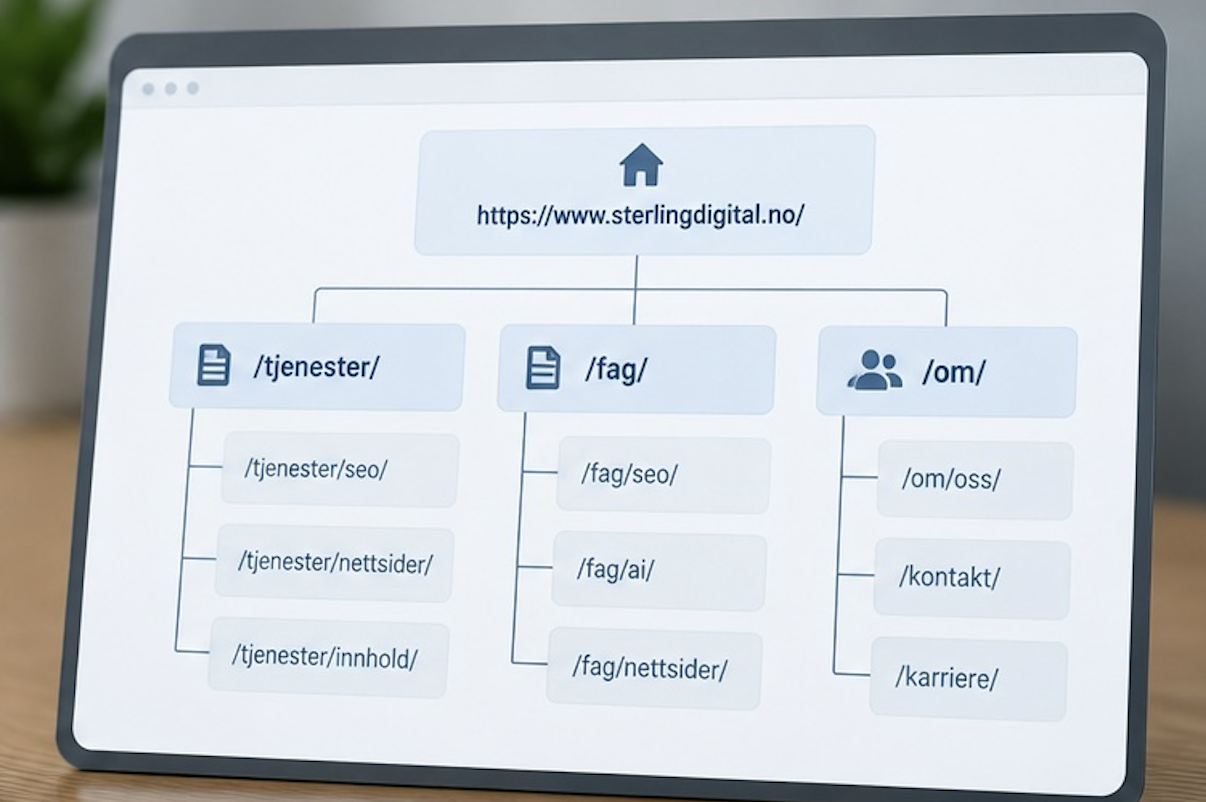
What Is an XML Sitemap, and Why Does It Matter for SEO?
An XML sitemap is a file that provides search engines with information about the URLs on a website. It can help search engines such as Google discover important pages, particularly on large websites, sites with complex structures, or websites that have relatively few external links.
A sitemap does not guarantee that a page will be crawled, indexed, or ranked. Its purpose is to support URL discovery, not to replace good website architecture, internal linking, useful content, or sound technical SEO.
For businesses that rely on organic search traffic, the goal is not simply to have a sitemap. It is to make sure search engines can discover the right pages, access their content, and understand how those pages fit into the wider website.
How Does a Sitemap Work?
An XML sitemap typically contains a list of URLs that a website owner wants search engines to discover. It can also include additional information, such as when a page was last significantly updated.
Search engines discover URLs in several ways, including internal links, external links, and sitemaps. A sitemap provides another source of information about the pages available on a website, but it does not replace the need for a clear and accessible internal linking structure.
It is useful to distinguish between three separate processes:
- Crawling: A search engine visits a URL and retrieves its content.
- Indexing: The search engine evaluates whether the content should be included in its search index.
- Ranking: The search engine determines how relevant a page is to a particular search and where it should appear in the results.
A sitemap can help search engines discover URLs, but it does not determine whether those URLs will be indexed or how well they will rank. A page may appear in a sitemap and still remain unindexed because of technical issues, duplicate content, limited value, or other factors.

When Is a Sitemap Particularly Useful?
The value of a sitemap depends on factors such as website size, structure, content publishing frequency, and how easily search engines can discover pages through links.
New Websites
A new website often has few external links and limited search visibility. Search engines may have fewer established paths through which to discover its content.
A sitemap can help make important URLs discoverable while the website builds its presence in organic search.
For a new consultancy, for example, the website might contain service pages, expert articles, and dedicated landing pages for different offerings. A sitemap can help search engines discover these URLs, while internal links and useful content provide context and help establish their relevance.
Large Websites
Websites with hundreds or thousands of URLs can be difficult to manage. Important pages may become harder to discover if the site has a deep hierarchy or an inconsistent internal linking structure.
A sitemap provides a consolidated list of relevant URLs. For an ecommerce website, this might include important category and product pages. For a professional services firm, it could include service pages, industry-specific resources, and a substantial library of articles.
The sitemap is particularly useful when it helps expose important URLs that are otherwise difficult to discover through the website’s normal navigation.
Websites That Publish Content Regularly
Businesses that frequently publish new articles or update existing pages need search engines to discover those changes.
An up-to-date sitemap can support URL discovery, but it should not be treated as a guarantee of faster indexing. Discovery and indexing depend on several factors, including the website’s technical accessibility, internal links, and the search engine’s assessment of the content.
For a content-driven business, a reliable publishing process should therefore cover both content production and technical checks. New pages should be linked from relevant parts of the website, and the sitemap should reflect the URLs that are intended to be indexed.
Multilingual Websites
Websites with English and Norwegian content may have multiple URLs serving different language audiences. These websites need a consistent URL structure and clear signals indicating which language version is intended for each audience.
A sitemap can help search engines discover the relevant URLs. However, it should be part of a broader multilingual SEO setup that includes appropriate internal links, localized metadata, and correct hreflang implementation where applicable.
Simply listing several language versions in a sitemap does not, by itself, establish their language or regional relationships.
Does a Sitemap Tell Google Which Pages Are Most Important?
A common misconception is that a sitemap acts as a priority list that makes Google rank selected pages more highly. It does not work that way.
You can choose which URLs to include in your sitemap, but inclusion does not automatically tell Google that those pages deserve higher rankings than other pages. A sitemap primarily supports discovery; it is not a direct ranking instruction.
Consider a business that wants its SEO consulting service page to attract qualified leads. Adding that URL to the sitemap is a sensible technical step, but it is not enough on its own. The page should also be accessible through relevant internal links, answer the questions potential customers have, and provide a clear explanation of the service.
You should also avoid treating the sitemap as a list of pages you want to hide from search engines. URLs that should not be indexed need to be handled using the appropriate technical controls.
Which Pages Should Be Included in a Sitemap?
A sitemap should generally contain canonical URLs for pages that you want search engines to be able to index.
For a typical business website, this often includes:
- Important service pages.
- Relevant articles, guides, and educational resources.
- Useful category pages.
- Landing pages that provide genuine value to the intended audience.
- Other unique pages that should be discoverable through organic search.
You should generally avoid including redirecting URLs, pages that return errors, duplicate URL variations, or pages that are not intended to be indexed. The URLs in the sitemap should also be consistent with the website’s canonical URL configuration.
Imagine a consultancy website with an SEO consulting service page, an article about technical SEO, and a landing page offering a free SEO audit. If all three pages are intended to appear in search results, they should be accessible through the website’s structure and considered for inclusion in the sitemap.
An internal search results page or an administrative page would normally serve a different purpose and would not need the same treatment.
The objective is not to include as many URLs as possible. It is to ensure that the sitemap reflects the pages that genuinely belong in the website’s organic search presence.
Sitemaps, Internal Links, and Indexing Must Work Together
A sitemap can help search engines discover URLs, but it cannot replace a good internal linking structure. Internal links help users and search engines navigate between pages and understand how the content relates to one another.
This is especially important for businesses building subject-matter authority through educational content. An article about technical SEO, for example, might link to a relevant service page, a related guide, or a broader resource page when that helps the reader.
A well-organized structure might work like this:
- A main page introduces a service or subject area.
- Supporting articles explain specific questions and problems within that area.
- Articles link to one another where relevant and guide readers towards appropriate services.
- The sitemap makes the canonical URLs easier for search engines to discover.
These elements serve different purposes. A sitemap provides a list of URLs, while internal links support navigation, context, and a coherent website structure.
How to Check Whether Your Sitemap Is Working
Generating a sitemap is not the end of the technical SEO process. You should verify that the file is accessible, contains the right URLs, and can be processed by search engines.
1. Find Your Sitemap URL
Many content management systems generate a sitemap automatically. A common location is /sitemap.xml, although the actual address depends on the publishing platform and its configuration.
Check the sitemap URL used by your website rather than assuming that every site uses the same location.
2. Review the URLs
Open the sitemap and check whether it contains the important pages you want search engines to discover. Look for incorrect URLs, redirects, duplicate variations, and pages that should not be indexed.
On larger websites, the main sitemap may reference several separate sitemap files. These might cover articles, product pages, or different sections of the website. This is a normal way to organize a larger collection of URLs.
3. Use Google Search Console
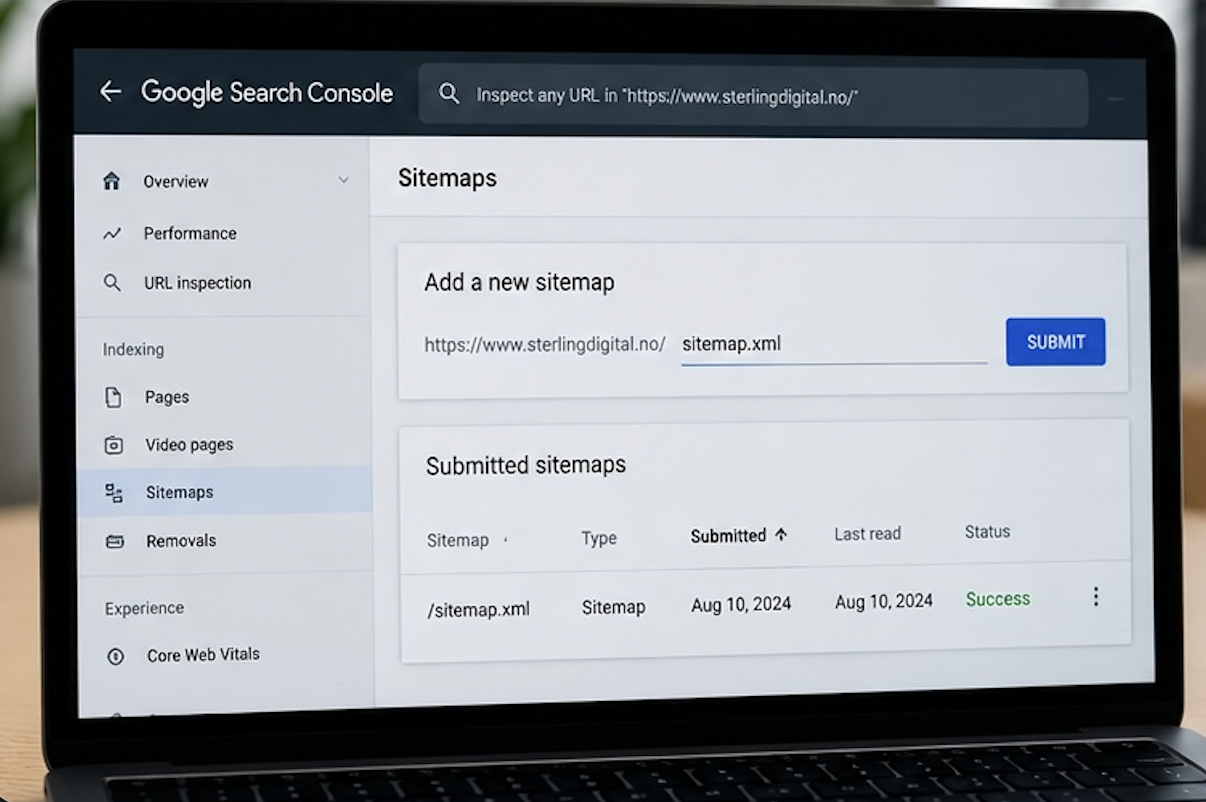
Google Search Console allows you to submit your sitemap URL and review information about its processing. This helps you understand whether Google has read the sitemap and whether any issues have been reported.
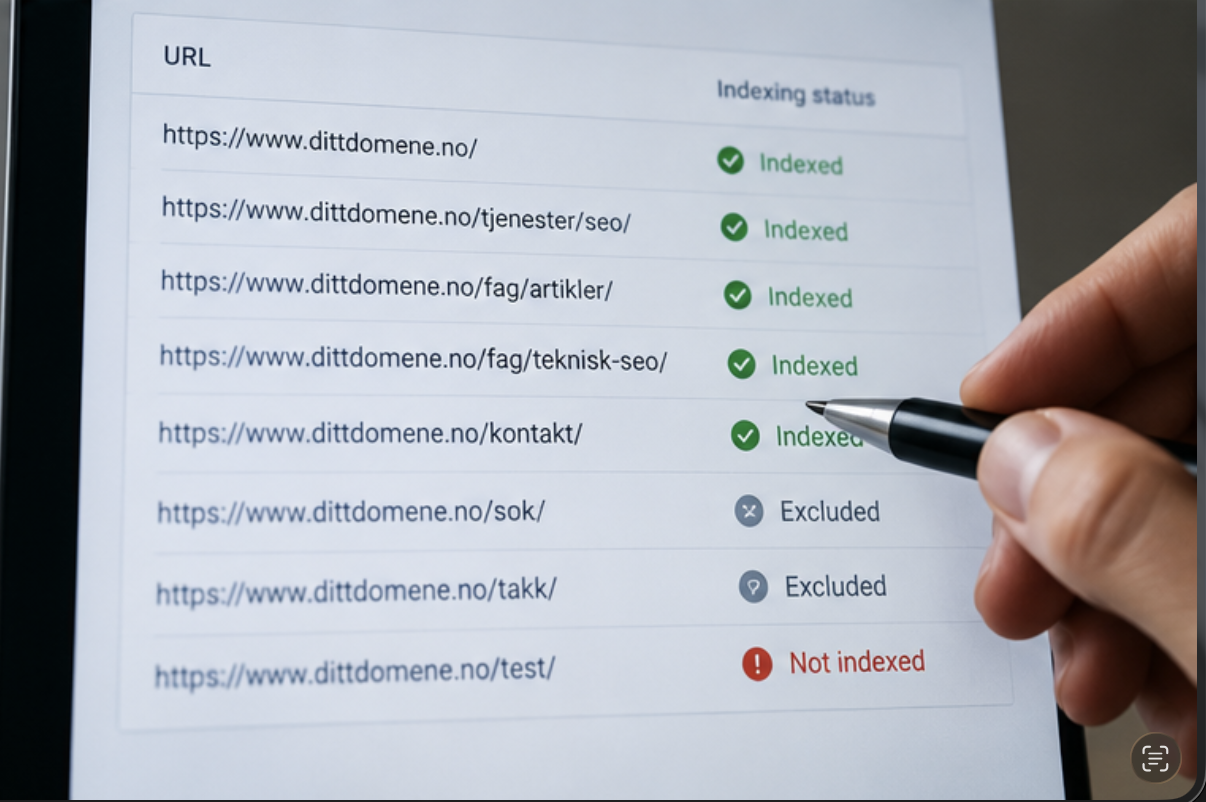
It is important to distinguish between URLs listed in a sitemap, URLs discovered by Google, and URLs that have actually been indexed. These figures do not necessarily match.
4. Investigate Pages That Are Not Indexed
If important pages do not appear in search results, investigate why. Check whether search engines can crawl the pages, whether they contain a noindex directive, whether they point to another canonical URL, and whether their content offers sufficient independent value.
Adding a URL to the sitemap does not automatically resolve any of these problems. Sitemap monitoring should therefore be part of a wider technical investigation rather than the only troubleshooting step.
Common Sitemap Mistakes
A sitemap can be accessible and still provide an incomplete or misleading picture of a website. Common mistakes include the following.
Including every URL without reviewing it. A sitemap should not automatically contain every URL that a publishing system can generate. Focus on canonical pages that are intended to be indexed.
Forgetting new or changed pages. Automatically generated sitemaps reduce the risk of missing content, but their configuration should still be checked after major website changes.
Using the sitemap as a substitute for internal links. Important pages should be accessible through a logical website structure. A URL should not have to rely on the sitemap alone to be discovered.
Assuming submitted URLs will be indexed. A sitemap provides information to search engines; it does not guarantee indexing or rankings.
Ignoring technical problems. Incorrect status codes, unintended noindex directives, crawling restrictions, or incorrect canonical URLs can prevent important pages from being indexed even when they appear in the sitemap.
Sitemaps in Webflow and Other Publishing Platforms
The process for creating and maintaining a sitemap depends on the publishing platform. Many systems generate sitemaps automatically, but the resulting file still needs to be checked.
For a website built in Webflow, review the publishing settings and confirm the actual sitemap URL. Check how static pages, CMS articles, and language versions are handled. For a site with both Norwegian and English content, it is particularly important to ensure that the relevant URLs are published correctly and that the language versions follow a consistent structure.
The precise steps can vary depending on the website configuration and the current features available in Webflow. Consult the official documentation when checking or changing the setup.
A Sitemap Is a Foundation, Not a Complete SEO Strategy
A correctly configured sitemap can help search engines discover important pages. However, its value is limited if those pages contain thin content, lack internal links, or fail to address what the target audience is searching for.
To improve organic visibility, consider the sitemap alongside your website architecture, content quality, internal linking, technical accessibility, and indexing status.
If you want to assess the technical foundation of your website, start by identifying which pages should be indexed, checking whether search engines can access them, and confirming that the sitemap matches the website’s actual structure.
That gives you a more useful starting point for technical SEO than treating the sitemap as an isolated task.
Continue Reading
More practical thinking on trust, discovery, and building a digital presence that compounds over time.





See where your biggest opportunities are
Start with a complimentary SEO audit and discover where your greatest opportunities for sustainable growth are hiding